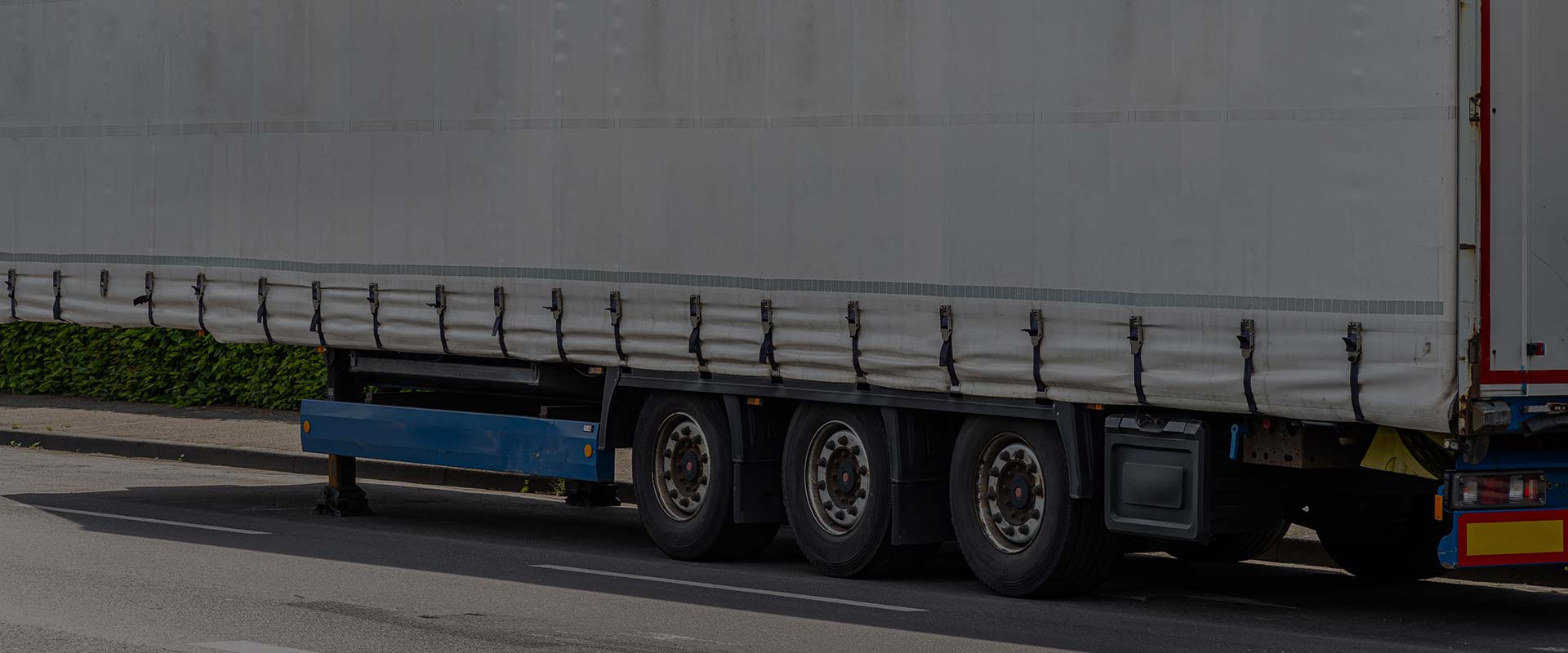
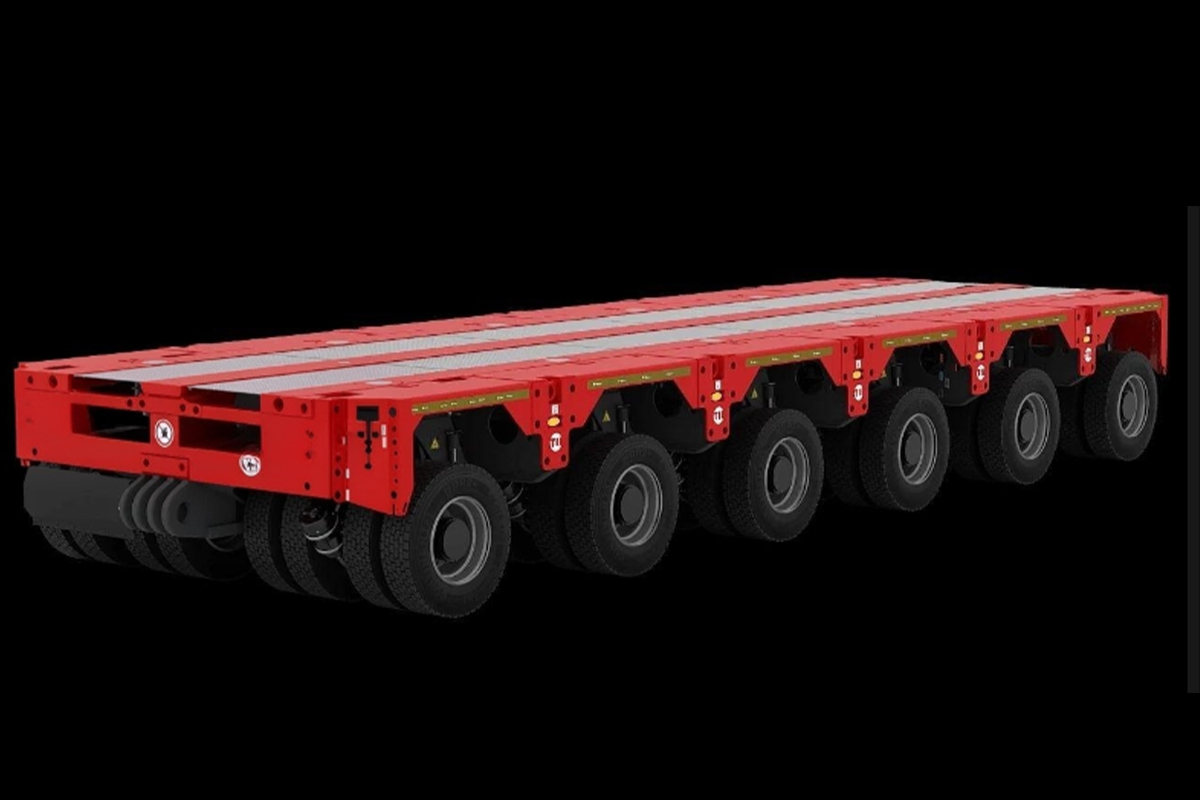
An S or C axle line trailer is a modular, self-propelled or towed heavy-haul platform built from individual axle lines that can be combined side by side or end to end. The "S" and "C" designations refer to the frame connection geometry between modules, which determines how load is distributed and how the platform steers around obstacles on a job site or public road. Compared with fixed-frame trailers, this configuration gives operators far greater flexibility when moving oversize or overweight cargo.
- Modular scalability: axle lines can be added or removed to match the exact payload, from a few dozen tons up to several thousand tons.
- High load evenness: hydraulic suspension across every axle line keeps ground pressure balanced, which protects both the cargo and the road surface.
- All-directional steering: independent steering at each axle line allows crab steering, circle steering and pivot turns in tight spaces.
- Fast reconfiguration: modules can be re-assembled in a different width or length configuration within hours rather than days.
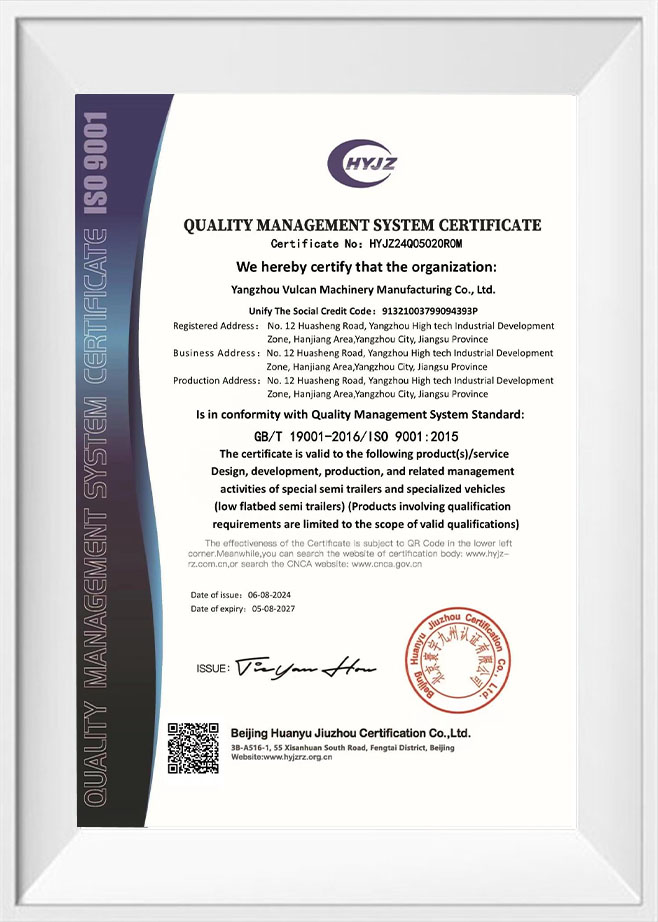
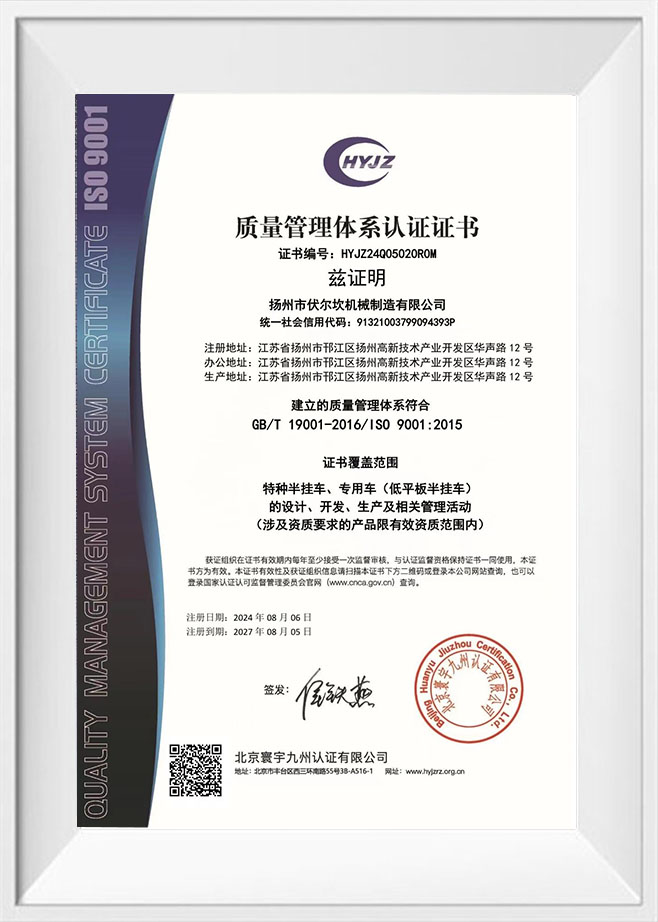
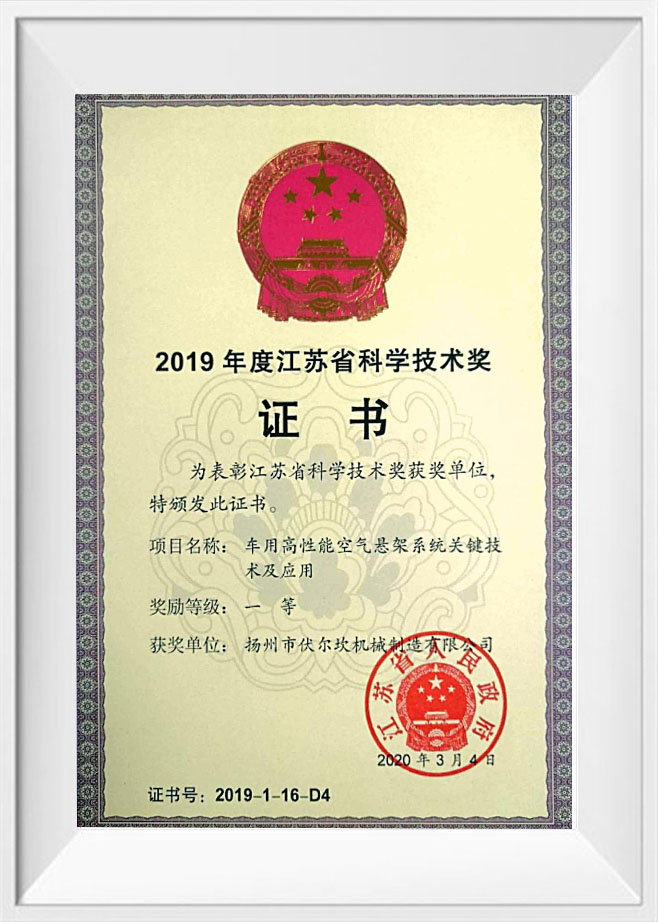
Founded in 2007, Yangzhou Vulcan Machinery Manufacturing Co., Ltd. is a National High-tech Enterprise and a national-level "Little Giant" enterprise focused on custom intelligent transportation equipment for oversize and heavy cargo. Its engineering teams design axle line trailers capable of handling 100 to 5000 tons of cargo, drawing on 66 national patents to fine-tune the frame connections that make S and C type modules perform reliably in demanding industries such as wind power, aerospace and heavy engineering.
How the Axle Line System Works
Each axle line is a self-contained unit with its own tires, hydraulic cylinders, steering knuckle and suspension. A central hydraulic and electronic control system links every line so the whole platform behaves as a single vehicle even though it is built from many independent modules.
Hydraulic Load Equalization
Pressure sensors on every axle line feed data back to the control cabin, which automatically adjusts cylinder height so the load stays level even when the trailer crosses uneven ground, ramps or bridge joints.
Steering Modes
Operators can select straight-line, crab, circle or independent steering from a remote control unit, letting the same trailer navigate a straight highway lane and then rotate almost on the spot inside a factory yard.
Typical steering modes on an S or C axle line trailer
| Steering Mode |
Best Use Case |
| Straight-line |
Highway and long-distance transport |
| Crab steering |
Lane changes and narrow corridors |
| Circle steering |
Sharp turns and roundabouts |
| Independent steering |
Precise positioning inside plants |
Choosing the Right Combination for Your Cargo
Selecting the number and arrangement of axle lines is largely a matter of matching total load capacity, ground pressure limits and turning space to the specific cargo. A wind turbine blade or a power transformer, for example, calls for a very different configuration than a bridge girder.
- Confirm total cargo weight and its center of gravity.
- Calculate the number of axle lines needed to keep per-axle ground pressure within road or site limits.
- Decide whether an S-type or C-type frame connection best suits the required turning radius.
- Add gooseneck or flat deck modules depending on loading height restrictions.
Manufacturers with strong in-house R&D, such as facilities holding multiple provincial-level R&D centers, are typically better positioned to customize these combinations for unusual cargo shapes rather than offering only standard catalog configurations.
Maintenance and Safety Considerations
Because an axle line trailer carries some of the heaviest and most valuable cargo in industry, routine maintenance directly affects safety outcomes.
- Inspect hydraulic hoses and cylinders for leaks before every heavy lift.
- Check tire pressure across all axle lines to keep load distribution even.
- Verify steering synchronization through a test run at low speed before full loading.
- Keep the control system firmware updated so sensor feedback stays accurate.
Operators who follow a structured maintenance schedule generally see fewer unplanned downtime incidents, which matters most on projects where a delayed heavy lift can hold up an entire construction schedule.
Frequently Asked Questions
The naming refers to the shape of the frame connector between modules. An S-type connector allows a smoother, wider turning arc, while a C-type connector is often chosen for tighter, more compact maneuvering in confined yards.
Q2: How many axle lines are needed for a 500-ton load?
The exact number depends on axle rating and permitted ground pressure, but heavy-haul projects in this range commonly combine multiple axle lines side by side and end to end, and a qualified manufacturer will calculate the precise configuration for the actual cargo dimensions.
Q3: Can these trailers be used on both public roads and job sites?
Yes. With the correct steering mode and, where required, local permits, the same platform can travel on public roads for long-distance transport and then switch to independent or circle steering for precise positioning inside a plant or construction site.
Q4: Is custom design available for unusual cargo shapes?
Many manufacturers offer custom deck lengths, gooseneck heights and axle arrangements. Companies with dedicated engineering teams and patented frame technologies are generally better equipped to design a trailer around irregular or oversized cargo rather than forcing the cargo to fit a standard trailer.





 عربى
عربى