Expert in Transporting National Heavyweight Equipment, Shaping the Future of
Intelligent Overlimit Heavy-Duty Transportation
-
 sales@yzvulcan.com
-
 +86-17701458666 +86-13951054888 +86-13901455125


 عربى
عربى

Content
What Is a Multi-Axle Trailer?
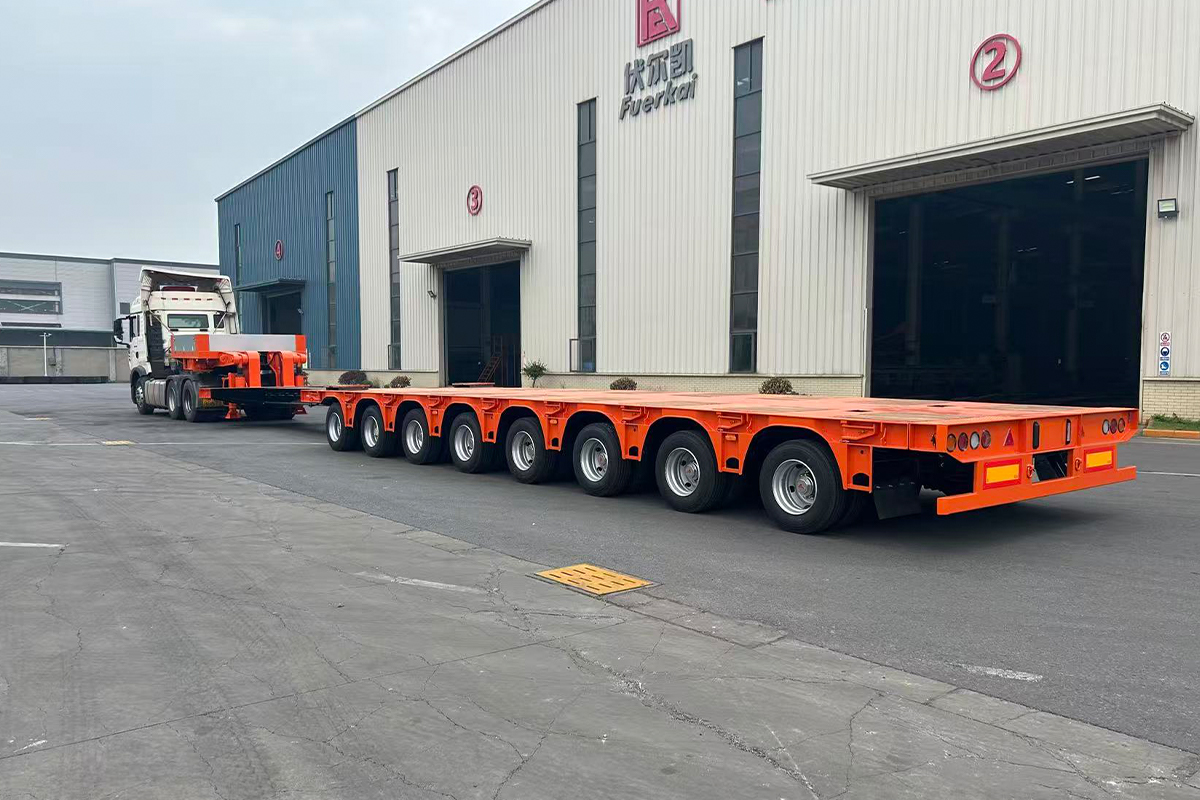
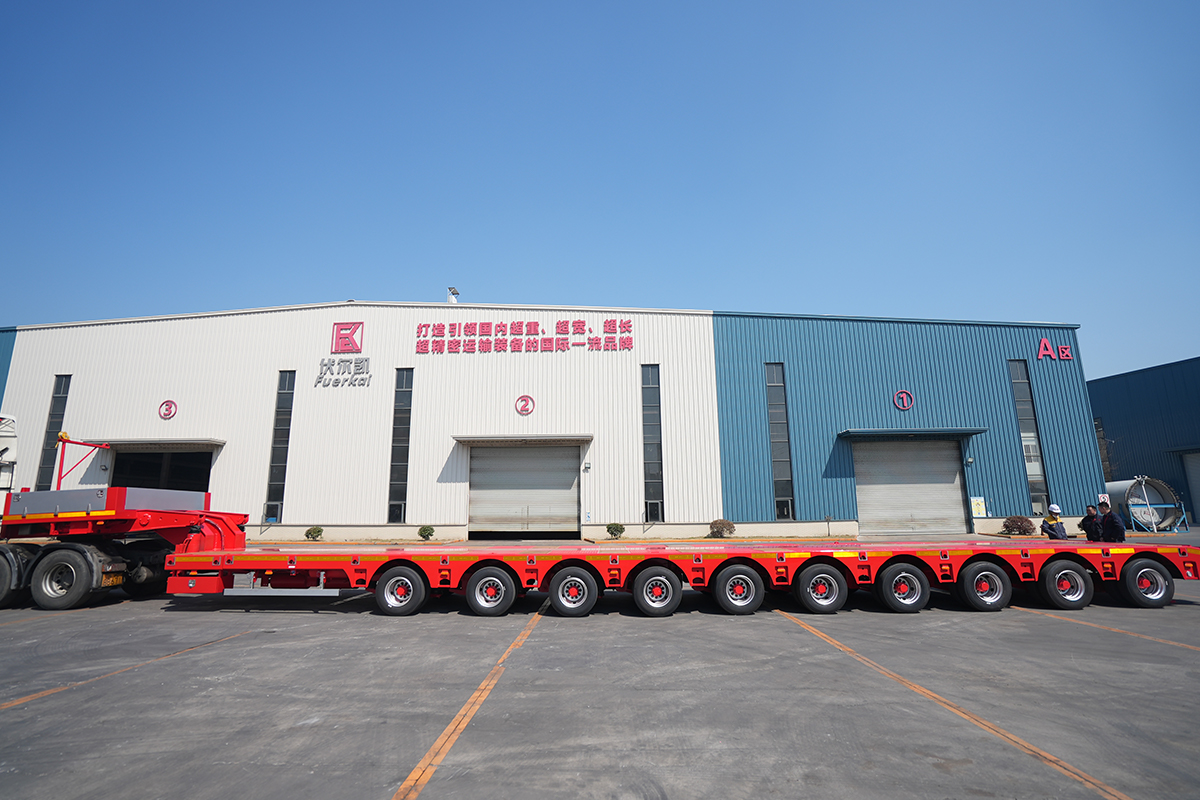
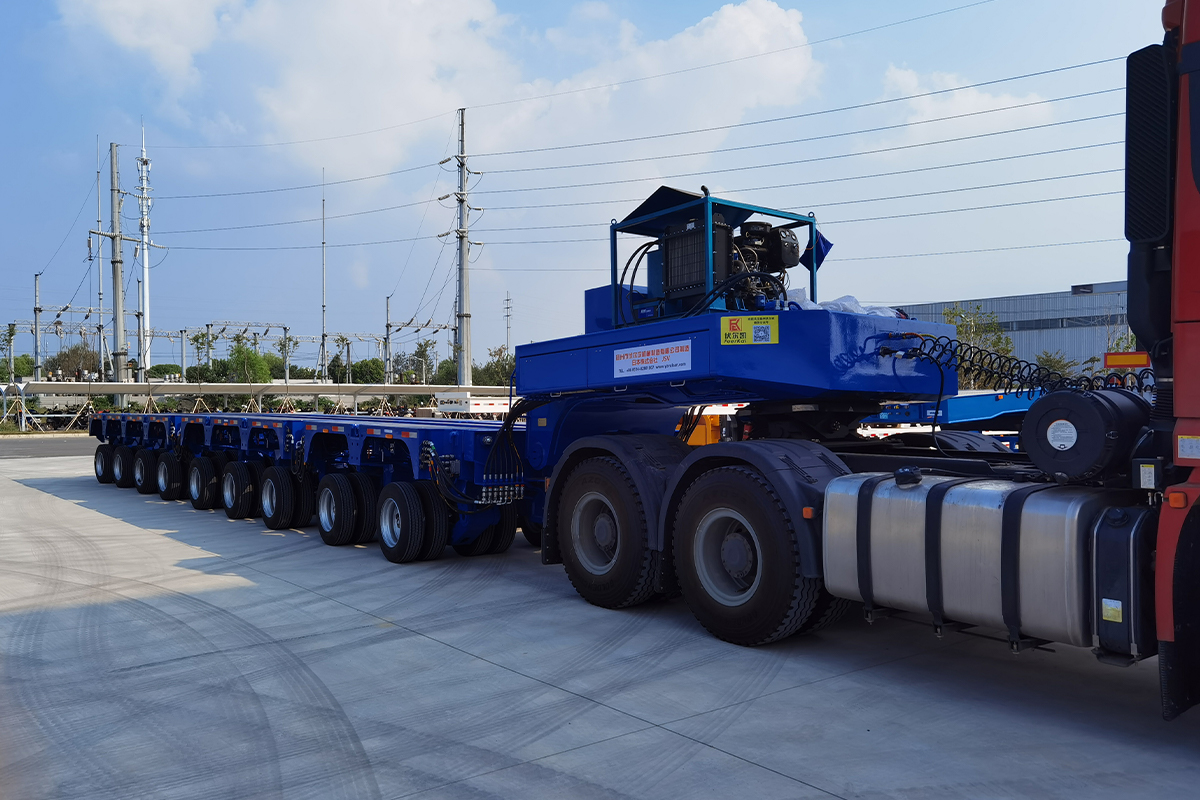
A multi-axle trailer is a heavy-duty transport trailer built with three or more axles instead of the standard one or two axles found on conventional trailers. The additional axles spread the total load across more wheel positions, which lowers the weight carried by each axle and allows the trailer to legally and safely haul much heavier or bulkier cargo. Multi-axle trailers are most commonly used for transporting oversized or overweight loads such as construction machinery, industrial equipment, transformers, steel structures, and prefabricated modules that a standard flatbed or two-axle trailer cannot handle.
The number of axles on a trailer directly determines its rated payload capacity. While a basic two-axle flatbed trailer may only carry 20 to 30 tons, a trailer with six, eight, or more axles can be engineered to carry well over 100 tons, depending on axle spacing, tire rating, and frame design. This scalability is why multi-axle trailers, particularly multi-axle lowbed trailers, have become the standard equipment choice for heavy haulage in construction, energy, mining, and infrastructure projects.
Core Structure and Design Features
A multi-axle trailer is not simply a longer version of a regular trailer — its structure is engineered specifically to manage extreme point loads and uneven road surfaces. The main structural elements include the following.
Reinforced Main Beam
The main beam is typically built from high-strength, low-alloy steel to resist bending under concentrated loads. For lowbed configurations, the beam is designed with a low deck height to keep the cargo's center of gravity close to the ground, improving stability during transport of tall or heavy machinery.
Independent Suspension System
Each axle line is usually equipped with independent hydraulic or mechanical suspension. This allows every axle to adjust individually to road irregularities, keeping tire contact even and preventing overloading of a single axle when crossing uneven terrain.
Steering Axles
Trailers with four or more axles commonly include hydraulic or mechanical steering axles at the front and rear. This significantly reduces tire scrubbing and turning radius, making it possible to maneuver long, heavy loads through tight job sites, ports, or urban roads.
How Axle Count Affects Load Capacity
The relationship between axle count and load capacity is not strictly linear, since capacity also depends on axle rating, tire size, and frame strength. However, as a general reference, the table below illustrates how typical payload capacity scales with the number of axle lines on a lowbed-style trailer.
| Axle Configuration | Typical Number of Wheels | Approximate Payload Capacity |
|---|---|---|
| 2-axle | 8 | 20–30 tons |
| 3-axle | 12 | 35–50 tons |
| 4-axle | 16 | 50–70 tons |
| 6-axle | 24 | 80–100 tons |
| 8-axle or more | 32+ | 120 tons and above |
These figures are general industry references rather than fixed engineering limits. Actual rated capacity always depends on the specific frame design, axle load rating, and applicable road transport regulations in the operating region.
Common Types of Multi-Axle Trailers
Multi-axle trailers are built in several configurations to match different cargo shapes and job-site conditions.
- Fixed lowbed trailers with a set deck length, suited for repeat hauling of similar equipment.
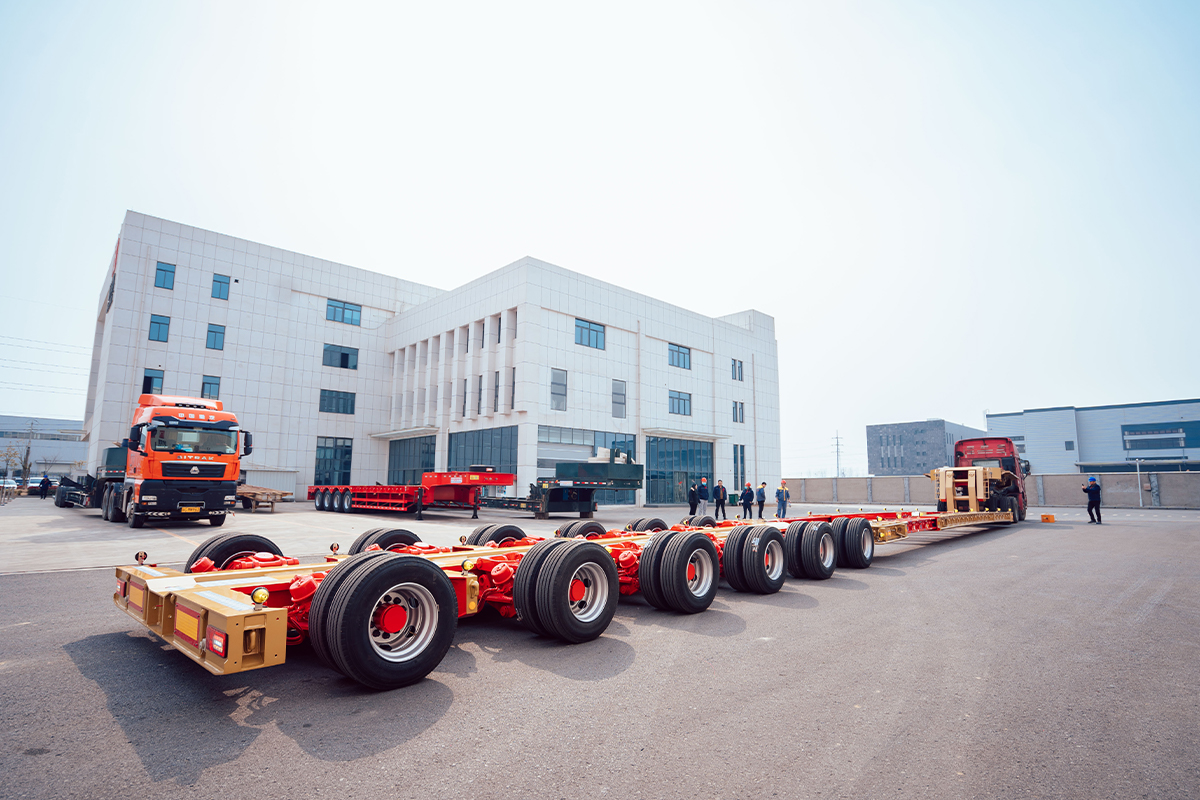
- Extendable lowbed trailers with a telescopic frame for long items such as wind turbine blades or bridge girders.
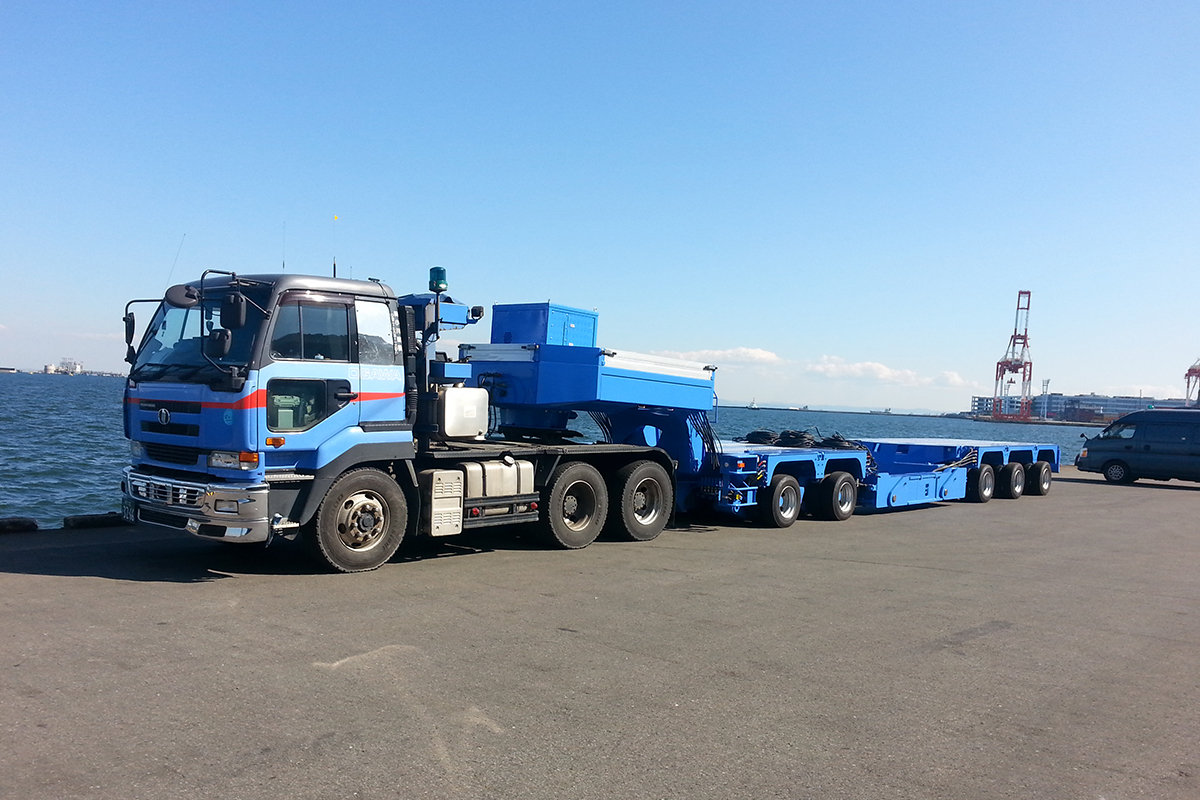
- Detachable gooseneck (removable neck) trailers that allow cargo to be driven directly onto the deck.
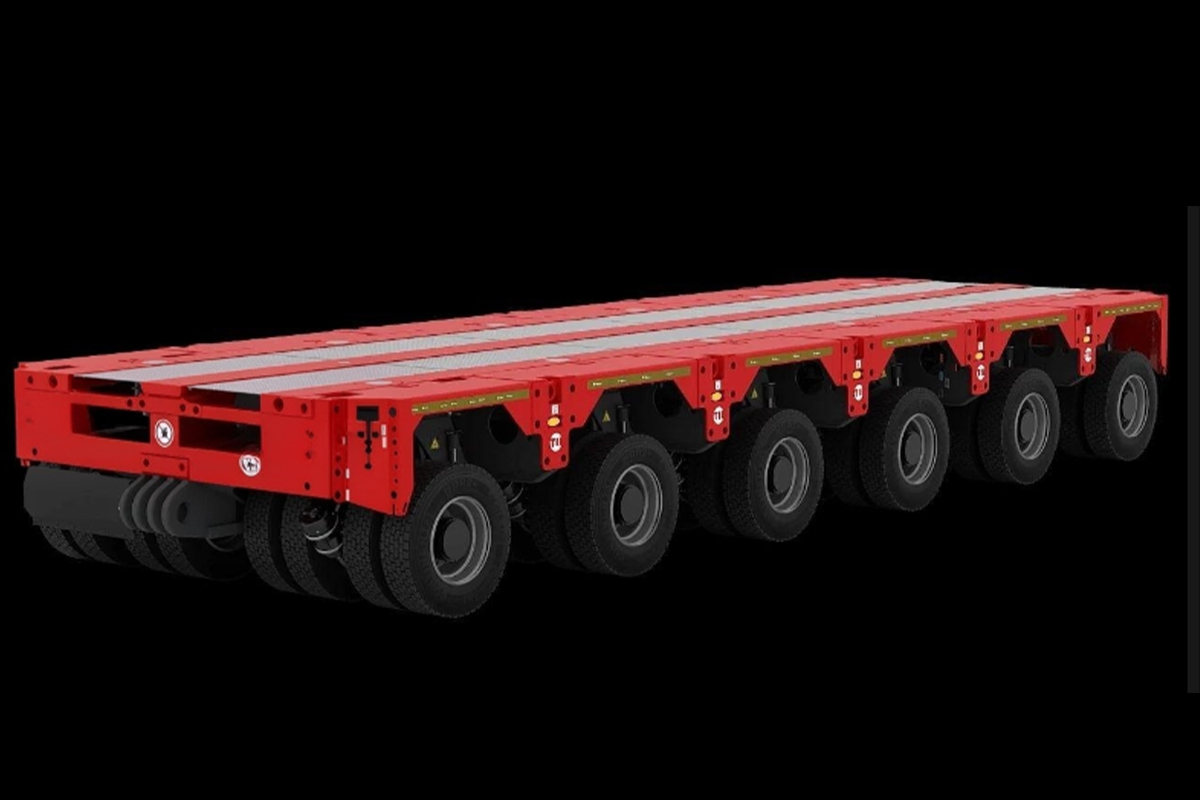
- Modular trailers made of individual axle lines that can be linked side by side or end to end for extremely wide or heavy loads.
Among these, the multi-axle lowbed trailer is the most widely used design because its low deck height accommodates tall machinery while still meeting standard road clearance regulations.
When a Multi-Axle Lowbed Trailer Is the Right Choice
A multi-axle lowbed trailer becomes necessary once cargo weight, height, or width exceeds what a conventional trailer can legally or safely carry. Typical situations include the following.
- Transporting excavators, bulldozers, cranes, or other tracked and wheeled construction equipment.
- Moving large industrial components such as generators, transformers, and pressure vessels.
- Delivering prefabricated steel or concrete structures to infrastructure and building sites.
- Hauling mining or port equipment where axle load limits on unpaved roads must be respected.
In each case, the goal is the same: keep the per-axle load within the legal limit of the roads and bridges along the transport route while transporting cargo that a single-axle-line trailer cannot support.
Key Advantages of Multi-Axle Trailers
Higher Load Distribution
By spreading weight across more axles, road wear and bridge stress are reduced, which helps operators comply with axle weight regulations without needing special road reinforcement in most cases.
Improved Maneuverability
Hydraulic steering axles allow long trailers to navigate curves, roundabouts, and site entrances that would otherwise be impossible for a rigid multi-axle unit.
Better Load Stability
Independent suspension keeps all wheels in contact with the road surface, reducing the risk of cargo shifting or tipping when crossing uneven or sloped ground.
Practical Considerations Before Choosing a Trailer
Selecting the right multi-axle trailer requires more than matching total weight capacity. Buyers and operators should also evaluate the following factors.
- Deck length and loading angle relative to the dimensions of the cargo being transported.
- Ground clearance needed for the specific terrain of the job site or transport route.
- Local axle load limits and permit requirements for oversized transport.
- Whether hydraulic steering or lifting axles are required for tight maneuvering.
Matching the trailer's axle configuration to both the cargo weight and the actual transport route conditions is the most reliable way to avoid overloading, permit delays, or structural damage during transport. A trailer rated for 80 tons on paved highways, for instance, may need a different axle spread if part of the route includes unpaved or soft ground.
More recommendations

Vulcan — bringing greater certainty to demanding transport operations.
Quick Links
Contact Information
-
 No. 12 Huasheng Road, Yangzhou High-tech Industrial Development Zone, Hanjiang District, Yangzhou City, Jiangsu Province, China
-
 +86-17701458666 / +86-13951054888 / +86-13901455125
-
 sales@yzvulcan.com
-
 8613901455125
Copyright © Yangzhou Vulcan Machinery Manufacturing Co., Ltd. All Rights Reserved.
OEM Transport Equipment Manufacturer